The Time Keeper

When you look at a clock, whether it is on top of a building or tied around your wrist, what you see is the quantification of the time that has passed – the time spent, used, wasted, or lost. Always the time that has been gone.

Day to day, we look at the clock as a guide to our social relationships. We want to take the bus on time, get to the classroom or medical appointment without any delays, and not miss the first few minutes of a new movie.

The clock is thus one of the most important instruments in our socialisation; it helps us to function in a coordinated way.

I have recently watched a video in which it was said that “every day we wake up to 24 clean hours.” We have a blank page ready to be filled. 1440 minutes of new possibilities and experiences. In order to use them in the best possible way and reach the end of each day with pride and satisfaction, that feeling of accomplishment is essential. Action and movement are imperative.

When the clock registers the passing of the minutes, the unavailability of those hours that existed when we opened our eyes in the morning may seem very cruel.

But you see, it also opens the doors of all that time that is still being offered. The opportunities are there, right in front of us. The time to catch up with work, to have that conversation with our parents, to praise a good friend or to thank a neighbour for their kindness last week, that time is present.

Better now than never.

Whose Reputation?

The first question is simple: on a scale from 1 to 10, how much do you care about other people’s opinion?

The second one is a bit trickier: under what categories do you place the people who are part of your life?

Whose opinion do you care the most and the least? Between father, mother, boyfriend, friend of your girlfriend, boss, unknown followers of Instagram and the neighbour’s cute cousin, who are you always trying to please or at least not to appear foolish to?

I personally tend to care about the opinion of absolutely everyone – from those who love me to the ones who clearly don’t. I suffer and I suffer with drama.

Of course age has taught me a few things and I did improve in some aspects here and there. But on the whole I alone am capable of making a whole soap opera.

I frequently try to guess what other people think about something I’ve done, for example, and I can overthink about the same subject for LONG days.

Social reputation, this is the flavour of the month.

I know I’m not alone. Our online behaviour is the biggest proof that we are constantly seeking the approval of others, and on a large scale.

I do not want to focus here on this worn out subject of perfect shots, meticulously calculated posts and the obsession with wows & likes. We know this is how things are and how they will continue to be. What bothers me the most, in fact, is that there is no more room for us to think about ourselves. The Internet takes so much of our time that the only thing we see is other people.

We are defined by the opinion of others; we are who the web shows we are.

You are probably not immune to all of this. Don’t you spend a good portion of your day looking at photos and videos posted by someone else, reading what they wrote and – even inadvertently – forming your opinion about them? When do you actually explore your own online profile and form opinions about yourself?

Who am I, ffs?

The Fascinating Readdressing of the World

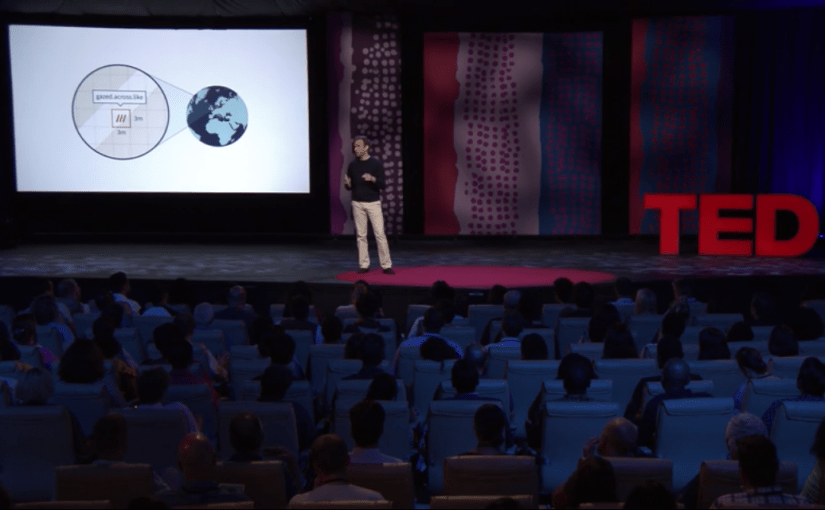
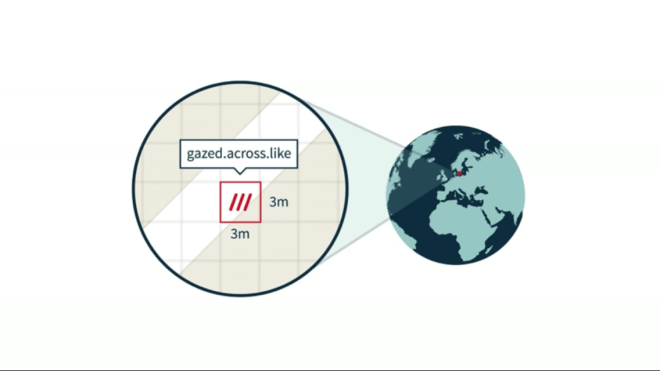
Based on a genius logical system developed from ordinary dictionary words, musician Chris Sheldrick and his team divided the entire planet into three-meter squares and redefined the address of each one of them. ‘Mustards-coupon-pinup’ is just an example of the identifier code generated by them.

In this video of just over five minutes, Sheldrick explains how the allocation of an accurate address to billions of people has a huge socio-economic impact, both locally and globally.

See below the link with subtitles available in many languages:

image3